
Why the Difference Matters
When your roof shows signs of damage, the cause determines who pays for the fix. Wind damage from a storm is typically covered by your homeowner’s insurance policy. Normal wear and tear from aging is your responsibility. Knowing how to tell the difference can save you thousands of dollars and help you avoid filing a claim that will be denied.
As a roofing contractor who has inspected countless roofs across Meridian and the Treasure Valley, I see both types of damage regularly. The differences are clear once you know what to look for, but they are easy to confuse if you are not trained to spot them.
What Wind Damage Looks Like
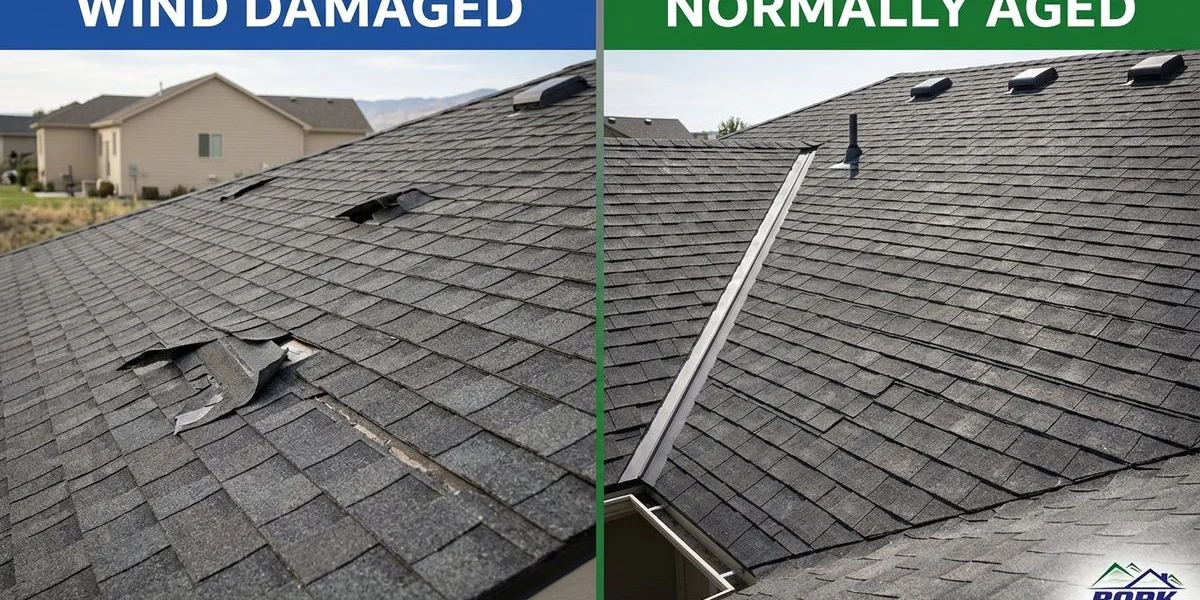
Wind damage to a roof follows predictable patterns based on how wind interacts with a structure. During high wind events, which are common in the Treasure Valley during spring and fall, wind creates uplift forces that attack the edges and corners of shingles.
Lifted or Creased Shingles
The most common sign of wind damage is shingles that have been lifted and creased along the sealant line. When wind gets underneath a shingle, it bends the shingle back, breaking the adhesive seal strip that holds it flat against the shingle below. Once this seal is broken, the shingle may:
- Remain in a slightly lifted position
- Show a visible crease line where it was bent
- Fold back entirely and break off
These creased shingles cannot reseal themselves. Even if they lay back down, the broken seal allows wind-driven rain to penetrate underneath.
Missing Shingles
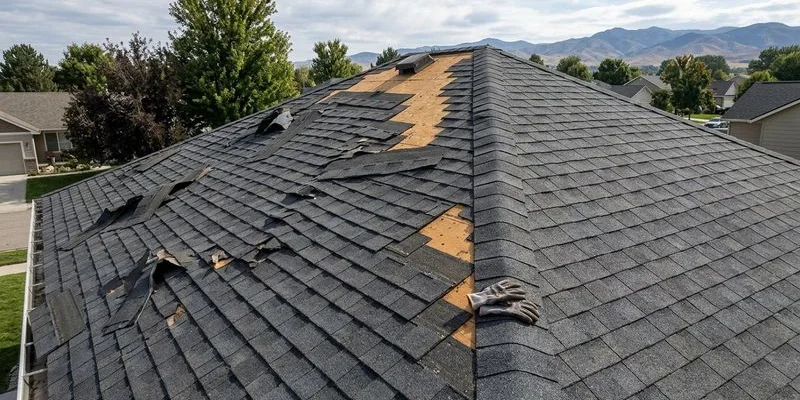
High winds can tear shingles completely off the roof. After a windstorm, walk around your yard and check for shingle pieces. On the roof itself, missing shingles leave visible dark patches where the underlayment or decking is exposed.
Wind damage tends to follow a pattern. The most vulnerable areas are along the ridges, hips, eaves, and corners of the roof because these are where wind forces are strongest. If you notice missing shingles concentrated in these areas, wind is the likely cause.
Damage to One Slope
Wind typically hits your home from a dominant direction. This means wind damage is often concentrated on one or two slopes of the roof, with the windward side taking the most punishment and the leeward side remaining relatively untouched. This directional pattern is a strong indicator of wind damage versus aging.
What Normal Wear and Tear Looks Like
All roofing materials degrade over time. Idaho’s climate accelerates this process with its combination of extreme UV exposure in summer, freeze-thaw cycles in winter, and occasional severe weather. Normal wear happens gradually and affects the entire roof relatively evenly.
Uniform Granule Loss
As shingles age, they lose granules gradually and evenly across the entire roof surface. You might notice your roof looking darker or blotchier than it did when it was new. Check your gutters after a rainstorm. Some granule accumulation is normal throughout a roof’s life, but if you are seeing heavy granule buildup and your roof is over 15 years old, the shingles are nearing end of life.
This differs from hail-related granule loss, which creates distinct circular patches at random impact points.
Curling and Cupping
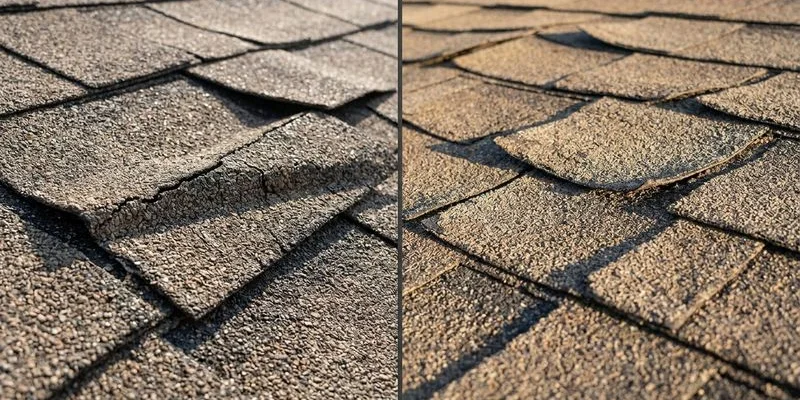
Older shingles curl at the edges or cup in the center. This happens because the asphalt layer shrinks as it loses its volatile oils over time. Curling typically starts on the south-facing and west-facing slopes where UV exposure is highest. The process is gradual and affects large areas uniformly rather than individual random shingles.
Cracking Throughout
Age-related cracking appears as a network of fine lines across the shingle surface, similar to how old paint cracks on a neglected surface. These cracks develop over years and affect many shingles in the same area, creating a consistent pattern of deterioration.
Moss and Algae Growth
In shaded areas of the roof, moss and algae can take hold over time. While not damage in the traditional sense, heavy moss growth lifts shingles and traps moisture against the roof surface, accelerating deterioration. This is a maintenance issue, not a storm damage claim.
How to Tell Them Apart
Here is a practical comparison to help you identify what you are dealing with:
Pattern
- Wind damage: Concentrated along edges, ridges, and the windward slope. Random missing or lifted shingles in these areas.
- Normal wear: Even deterioration across the entire roof surface. Gradual and consistent patterns.
Timing
- Wind damage: Appears suddenly after a specific weather event. You can often trace it to a particular storm.
- Normal wear: Develops slowly over months and years. No sudden change.
Shingle Condition
- Wind damage: Shingles are creased, bent, torn, or missing entirely. The remaining material may still be in good condition.
- Normal wear: Shingles are uniformly degraded with curling, granule loss, cracking, and brittleness.
Surrounding Evidence
- Wind damage: Other property damage from the same storm, such as broken branches, damaged fences, or debris in the yard. Neighbors may have similar damage.
- Normal wear: No associated property damage. The roof condition matches its age and maintenance history.
What About Both at the Same Time?
This is actually the most common scenario I encounter. An older roof with existing wear gets hit by a windstorm, and both types of damage are present. Insurance will cover the storm-related damage but not the pre-existing wear.
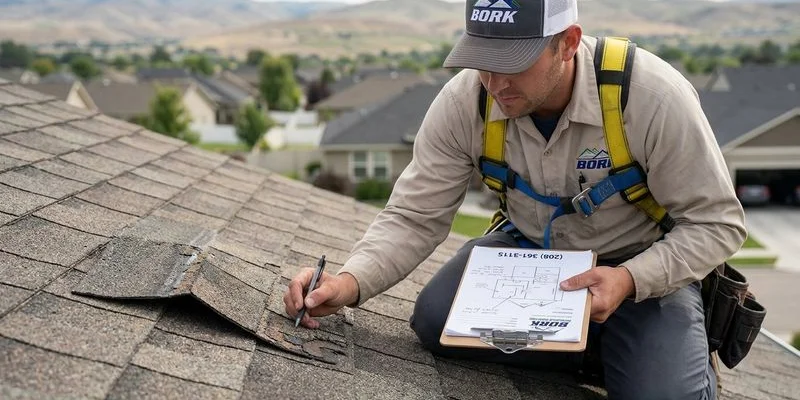
In these situations, the adjuster’s job is to differentiate between the two. Having an experienced roofing contractor who can clearly identify and document the storm-related damage separately from the wear helps ensure you receive fair compensation for the insured damage.
Sometimes, even if the wear-related condition of the roof does not warrant a full replacement on its own, the combination of existing wear plus new storm damage tips the scale. The storm damage may be the triggering event that makes replacement the appropriate remedy.
When to File a Claim
If you believe your roof has sustained wind damage, here is my advice:
- Document the storm: Save weather reports and note when high winds occurred in your area
- Get a professional inspection: A qualified roofing contractor can distinguish between wind damage and wear
- File promptly: If wind damage is confirmed, file your insurance claim as soon as possible
- Do not file for wear: Filing a claim that is denied for normal wear can count against you with some insurance carriers
At Bork Roofing, we provide honest assessments. If your damage is from aging rather than a storm, we will tell you directly. If it is wind-related, we will help you document it properly and navigate the insurance claim process.
Get an Honest Assessment
Not sure whether your roof damage is from wind or aging? Contact us for a free inspection. We will give you a straightforward answer and help you decide on the right next step, whether that is an insurance claim, a repair, or planning for a future roof replacement.